


Best Small Dog Bed Ramp Now: Cedric’s Favorite Safe Way Up to Your Bed
Small and senior dogs want to be right beside you on the bed, not waiting on the floor for a lift. But repeated jumping on and off high furniture can be risky for tiny bodies and aging joints. A well-designed small dog bed ramp gives your pup safe, independent access to their favorite spot while protecting their back and legs for years to come. At Tiny Chihuahua Shop, Cedric’s clear favorite is the solid maple DoggoRamps bed ramp, made specifically for little paws and big beds. Below, you’ll find everything you need to know to choose and use the best small dog ramp for your bed at home.
Key Takeaways
| Question | Short Answer |
|---|---|
| What is the best small dog ramp for beds? | Cedric’s favorite is the solid hardwood DoggoRamps bed ramp, featured here Cedric's Favorite Small Dog Ramp for Beds, designed for small breeds and high beds. |
| Why do small dogs need a ramp instead of stairs? | Many tiny and long‑backed breeds are prone to IVDD and joint issues; a gentle ramp puts far less impact on their spine and knees than jumping or steep steps. |
| What height bed can a good ramp reach? | DoggoRamps’ bed ramp adjusts to fit beds from 12" to 37", covering most low platforms to tall box springs. |
| How do I keep my dog from slipping? | Look for a ramp with a true non-slip surface like DoggoRamps’ PAWGRIP that grips tiny paws better than carpet or bare wood. |
| Is a small dog ramp worth it for young dogs? | Yes. Protecting joints early can help prevent injuries later, especially for Chihuahuas, Dachshunds, and other fragile breeds. |
| How do I train my dog to use a bed ramp? | Place the ramp flush with the bed, use treats on the ramp surface, and practice short, positive sessions. Most dogs catch on within a few days. |
| What other gear helps tiny dogs stay safe and comfy? | Winter boots like our Maya Small Dog Winter Boots and indoor potty options like The Doggy Bathroom help keep small pups warm, dry, and independent indoors. |
1. Why Small Dogs Need a Bed Ramp (Not Just a Lift from You)
Small dogs may look sturdy when they zoom around the house, but their joints and spines are often far more delicate than we realize. Breeds like Chihuahuas and Dachshunds are especially prone to IVDD (Intervertebral Disc Disease), luxating patellas, and early arthritis. Repeated jumping up and down from a bed puts sharp impact on their spine and knees every single time. A properly designed small dog bed ramp turns that impact into a smooth, controlled walk. Instead of landing hard on tiny legs, your dog can stroll safely up and down, even when they’re sleepy or excited. Over time, this can mean fewer injuries, fewer vet visits, and a more comfortable life for your pup. 
Everyday Jumps Add Up Over Time
You might only see your dog jump on and off the bed a few times a day. In reality, those jumps easily add up to dozens, especially if your dog follows you from room to room. Each landing sends force through their wrists, elbows, shoulders, hips, and spine. For a big dog, that’s still a risk. For a 2–10 lb Chihuahua or similar‑sized pup, it can be the difference between a healthy back and a slipped disc. A ramp is one of the simplest ways to cut down that daily wear and tear.
Independence for Senior and Special‑Needs Dogs
Senior dogs and dogs with existing mobility problems often can’t safely jump at all. Arthritis, muscle loss, or previous injuries can make even a short hop painful. A gentle, low‑incline ramp lets them stay independent, getting on and off the bed without needing to bark or whine for you in the middle of the night. That independence is more than convenience—it’s dignity. Many older pups become anxious when they can’t reach you easily. A stable ramp restores their confidence and keeps them close.
2. Cedric’s Favorite Small Dog Bed Ramp: Meet DoggoRamps
For Cedric, our resident Chihuahua, one ramp stood out above all the rest: the solid hardwood DoggoRamps bed ramp, created specifically with small dogs in mind. It’s not a generic plastic plank or wobbly stairs. It’s a carefully engineered ramp that considers the size, strength, and real‑life habits of tiny dogs. Cedric uses his ramp daily to reach a high human bed, and it’s become a normal part of his routine. No more standing at the edge of the mattress and crying for a lift, and no risky late‑night jumps when we’re half asleep. 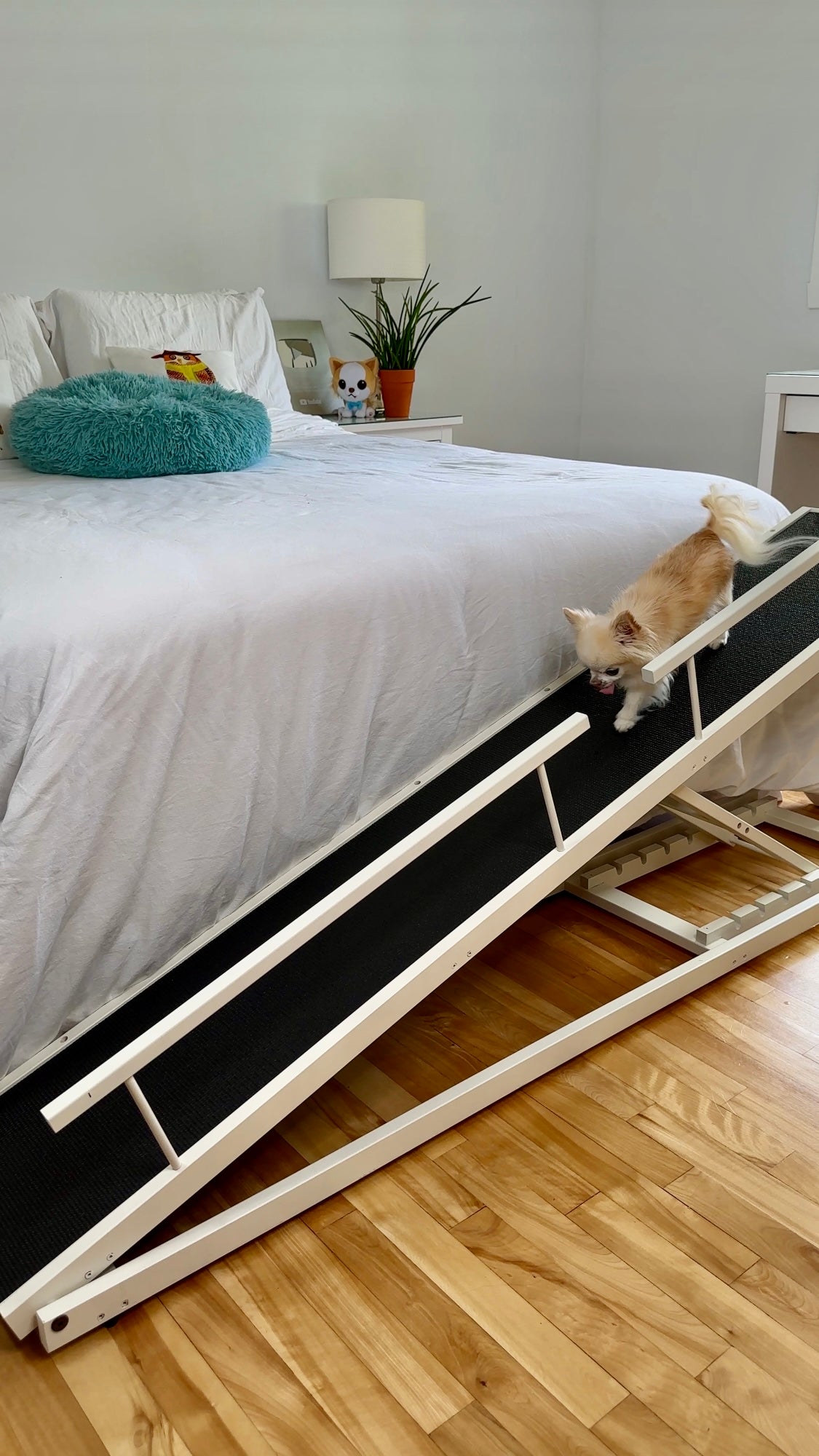
Key Features of Cedric’s Go‑To Bed Ramp
DoggoRamps’ bed ramp offers a combination of size, safety, and style that’s hard to beat for small dogs:
- Adjustable height to fit beds from 12" to 37"
- Non‑slip PAWGRIP surface that gives real traction to tiny paws
- Gentle incline designed for short legs and senior joints
- Reversible safety rails to keep your dog from stepping off the side
- Solid Maple hardwood construction that feels like real furniture
- Folds flat for easy storage under the bed or in a closet
- Supports up to 50 lb, ideal for small and many medium dogs
Designed Specifically for Small Breeds
Many generic ramps on the market are built with larger dogs in mind, then simply “shrunk down” in size. DoggoRamps did the opposite: they started with the needs of small and tiny dogs first. The angle, width, and surface all cater to short strides and delicate paws. This is why Cedric took to it so quickly. The ramp doesn’t feel steep or slippery to him, and the safety rails give a clear path, so he always knows exactly where to go.
3. How the Best Small Dog Bed Ramp Protects Joints and Backs
One of the biggest reasons to invest in a small dog ramp is simple: injury prevention. Certain small breeds are over‑represented in back and joint problems, especially long‑backed dogs such as Dachshunds and small, fine‑boned dogs like Chihuahuas and Italian Greyhounds. These dogs are more likely to develop IVDD, spinal injuries, or knee and hip problems over their lifetime. Reducing the shock from jumping is one of the easiest ways to lower that risk.
Why Ramps Beat Jumps for Tiny Dogs
Jumping from a bed means landing from a height that, for your dog, can be several times their shoulder height. Imagine your own body jumping down from a platform as tall as you are, again and again. That’s what a normal bed looks like from a Chihuahua’s point of view. A ramp replaces that sudden drop with a walk at a comfortable angle. Each step is a controlled motion, and the spine remains in a natural, level position. Over years, that difference can be huge.
Perfect for Senior Dogs and Dogs with Mobility Issues
As dogs age, you may notice them hesitating at the side of the bed or misjudging a jump. Arthritis, stiffness, and muscle loss all make jumping harder and more dangerous. A low‑incline ramp gives your dog an option that feels doable, even on their worst days. For dogs already diagnosed with IVDD, hip dysplasia, or chronic joint disease, most vets recommend avoiding jumping entirely. In those cases, a bed ramp isn’t a luxury—it’s an essential part of their home setup.
4. Ramp vs. Steps vs. Lifting: Which Is Safest for Small Dogs?
When you first start looking for a way to help your small dog reach the bed, you’ll usually see three options: foam steps, hard stairs, or a ramp. All three can be useful, but for many tiny and senior dogs, a ramp is the safest and most comfortable long‑term choice. Understanding the differences helps you pick what works best for your pup’s size, age, and health.
Quick Comparison: Ramps vs. Stairs
| Option | Pros | Cons for Small Dogs |
|---|---|---|
| Ramp | Gentle angle, continuous surface, easiest on joints | Needs enough floor space; quality models cost more than basic steps |
| Foam Steps | Lightweight, soft | Often too steep; can wobble; many tiny dogs slip or avoid them |
| Hard Stairs | Stable, compact | Movements are still “mini jumps”; not ideal for IVDD‑prone breeds |
| Lifting by Hand | No extra furniture, quick for humans | Dog can become dependent; risk of you dropping them; not possible every time |
Why We Recommend a Gentle Ramp for Most Tiny Dogs
For young, completely healthy dogs, any safe aid is better than nothing. But for fragile, older, or long‑backed dogs, a ramp with a mild incline is the clear winner. It offers the kindest movement pattern, is easy for dogs to learn, and doesn’t require jumping between treads like stairs. With a high‑quality surface and side rails, ramps also give nervous dogs a clear, confident pathway—something many little dogs appreciate when walking to and from a tall bed in the dark.
5. Safety Features to Look For in a Small Dog Bed Ramp
Not every ramp on the internet is safe for a 5 lb Chihuahua or a 12 lb senior Dachshund. Some are too steep, some are too slick, and some are so flimsy they wobble under a tiny dog’s weight. There are a few features that matter far more than the color or pattern. DoggoRamps’ design lines up well with what most vets and small‑dog owners look for in a ramp used daily beside a bed.
Essential Safety Details
When you compare ramps, focus on these elements first:
- Non‑slip surface: Smooth wood or plastic can be dangerous. DoggoRamps uses a PAWGRIP surface specifically for good traction.
- Stable base: The ramp should not wobble or flex under your dog’s weight.
- Side rails: Reversible safety rails help prevent missteps, especially for fast or anxious dogs.
- Gentle angle: The incline should feel like a hill, not a ladder, for short legs and senior joints.
- Weight capacity: Even for tiny dogs, a generous weight limit (up to 50 lb for DoggoRamps) is a sign of solid construction.
Height Adjustability for Different Beds
Beds vary widely in height. Low platform beds and tall box springs can differ by more than a foot. A fixed ramp might fit one bed but be unsafe on another. That’s why a ramp like DoggoRamps, which adjusts to beds from 12" to 37", is so practical. You can fine‑tune the height so the top of the ramp sits flush against your mattress, with no gap or step that could trip your pup.
6. How to Train Your Small Dog to Use a Bed Ramp
Some dogs trot up a new ramp like they’ve been doing it for years. Others pause, stare, and clearly say, “Absolutely not…” with their eyes. The good news is that with the right approach, nearly every dog can learn to love their ramp. Cedric himself needed a bit of encouragement at first. Now, it’s just part of how he moves around the bedroom.
Step‑by‑Step Ramp Training
- Place the ramp flush with the bed. Make sure there is no gap or wobble where the ramp meets the mattress.
- Let your dog sniff and explore. Don’t rush the first introduction—simply reward curiosity.
- Use treats as a breadcrumb trail. Place small treats along the ramp surface, leading up toward the bed.
- Guide gently if needed. You can use a leash or your hand to encourage forward movement without pulling.
- Practice short sessions. A few minutes several times a day works better than one long, stressful attempt.
Cedric’s Training Tip
Cedric responded especially well when we placed his favorite blanket and toy on the bed right at the top of the ramp. Seeing his own things where the ramp led helped him understand that walking up the ramp was simply a new route to his usual place. Stay patient and upbeat. Some dogs “get it” in one day; others may take a few days of relaxed practice. Consistency and gentle encouragement are more effective than forcing them.
7. Keeping Tiny Dogs Warm and Safe Indoors with a Ramp Setup
For very small dogs like Chihuahuas, environmental conditions play a huge role in their safety. Cold floors, drafts, and slippery surfaces can be more than just uncomfortable—they can trigger health issues. Cedric has even had hypoglycemic episodes triggered by cold exposure in winter. A bed ramp is part of a broader indoor setup that keeps your dog close to you, off cold floors, and away from unsafe jumps or slippery paths. 

Reducing Cold and Slippery Floor Risks
Even indoors, tile and hardwood can feel icy to a dog who weighs less than a house cat. Pairing a ramp with a cozy bed or blanket reduces the time your dog spends walking across cold floors just to reach you. For winter outings, a product like Maya Small Dog Winter Boots at $12.99 helps protect paws outdoors, while a ramp protects joints when they come back in and head for a warm bed. Together, they cut down on stress to both their body temperature and their joints.
Indoor Independence Without Extra Trips Outside
On stormy or freezing nights, some dogs don’t want—or shouldn’t have—to go all the way outside. An indoor potty solution such as The Doggy Bathroom lets small dogs stay warm while still having a designated bathroom spot. Placed thoughtfully in the same general area as their ramp and bed, this creates a little indoor “zone” where your dog can move comfortably between sleeping, relaxing, and potty time, all without risky jumps or extended cold exposure.
8. Style Matters Too: A Ramp That Looks Like Real Furniture
Many pet ramps on the market are made from cheap plastic or flimsy foam covered in fabric that quickly pills and sags. They work for a while, but they rarely look good next to your carefully chosen bedroom furniture. DoggoRamps takes a different approach with solid Maple hardwood construction and a clean, furniture‑like design. It doesn’t scream “pet accessory”; it blends in like a small, attractive piece of wood furniture at the side of your bed.
Why Solid Maple Hardwood Is a Big Deal
Hardwood matters for more than looks. It provides weight and stability, so the ramp doesn’t slide around or flex under your dog. It also holds up to daily use far better than particleboard or plastic. Because it looks like real furniture, you’re more likely to keep it in place long‑term instead of tucking it away. And that consistency is exactly what your dog needs to build a strong habit of using the ramp every single time.
Creating a Cozy Bedside Zone
A stylish ramp is also easier to coordinate with your other dog gear—coats, blankets, or even seasonal outfits like Cedric’s favorite costumes. When everything looks intentional, your bedroom feels more like a shared, thoughtfully arranged space rather than a jumble of mismatched pet items. For small‑dog households, this kind of cozy, permanent setup makes it simple to maintain your dog’s routines and safety without sacrificing your own sense of style.
9. Real‑Life Use: How Cedric Uses His Small Dog Bed Ramp
It’s one thing to read about a ramp on paper; it’s another to see how it changes a real dog’s daily life. Before having his ramp, Cedric often hesitated before trying to jump onto the bed, especially at night when he was tired or when the room was dark. Sometimes he misjudged the height and needed help. Other times he simply stood on the floor, whining, until someone noticed and lifted him up. That routine wasn’t comfortable for him—or for the humans who had to wake up and respond.
From Struggling to Confident Climber
Once Cedric’s DoggoRamps bed ramp was set up, the change was quick. Previously using a plastic staircase, with a bit of treat‑based training and encouragement, he learned that the ramp was his reliable path up and down. Now he trots onto the bed on his own schedule—morning cuddles, midday naps, or nighttime snuggles. He no longer needs to call for help, and we no longer worry about the risk of a tumble down the staircases when we’re not watching.
Cedric’s Experience: “Before the ramp, bedtime meant guessing whether I could make it up the stairs. Now, I just walk up my ramp like it’s my own little bridge to the best spot in the house.”
Peace of Mind for Humans, Comfort for Dogs
For us, the biggest benefit has been peace of mind. We know Cedric can get on and off the bed safely whether we’re right there or not. No more nervous moments hearing a thump and wondering if he landed safely down his old stairs. For him, it’s comfort and confidence. He has full access to his favorite place without ever having to strain his back or joints.
10. Choosing the Right Small Dog Bed Ramp for Your Home
When you’re ready to bring a ramp into your bedroom, it helps to run through a quick checklist. Bed height, floor space, and your dog’s age and size all matter. The goal is to match a sturdy, properly sized ramp to the way you and your dog actually live. DoggoRamps’ bed ramp checks most boxes for small‑dog households, but it’s still worth reviewing your own needs before you decide.
Checklist Before You Buy
- Measure your bed height. Make sure the ramp you’re considering can adjust to your mattress height.
- Check your floor space. Measure how far out from the bed you can place a ramp.
- Consider your dog’s health. Seniors and IVDD‑prone breeds do best with especially gentle inclines.
- Look for key safety features. Non‑slip surface, stability, and side rails are must‑haves for many small dogs.
- Think about style and durability. A ramp that looks like furniture is more likely to stay put and be used consistently.
Price and Value Considerations
While some basic foam or plastic options cost less upfront, they may not offer the stability, traction, or longevity your dog needs. A well‑built hardwood ramp is an investment in long‑term safety, not just a quick fix. When you spread that cost over the years of daily use, plus the potential reduction in injury risk, a high‑quality ramp often ends up being the better value—both for your wallet and your dog’s health.
Conclusion
For small and senior dogs, a bed ramp is more than a convenience—it’s a daily safeguard for their back, joints, and confidence. Cedric’s favorite DoggoRamps bed ramp stands out because it pairs solid Maple construction and a gentle, adjustable incline with thoughtful safety features like a non‑slip PAWGRIP surface and reversible side rails. If your Chihuahua, Dachshund, or other tiny companion loves sleeping on your bed, giving them a stable, easy‑to‑use ramp is one of the kindest upgrades you can make to your home. It protects their body, supports their independence, and lets you both relax knowing they can always reach their favorite place—safely, quietly, and on their own.
1 comment
I need one of these. He’s 10 now and he’s slipping on my floors.